
The Breastmilk Club
Your online source for up-to-date breastfeeding information
Babies Who Need Special Attention
Some infants will have physical, neurological, or genetic health concerns that will impair their ability to breastfeed effectively.
-
Mothers of these infants will require more contact, encouragement and help in establishing/maintaining breastfeeding
-
If an ill infant is unable to breastfeed, the mother can express her milk and the child will feed EMB (expressed breast milk)
-
Once your infant has recovered, the mother should breastfeed as much as possible to increase milk production and help the child gain the necessary amount of weigh
-
Special Needs of Premature Infants
-
Environment: temperature control, stable blood sugar and increased oxygen
-
Nutritional Requirements: high energy and low volume needs
-
Skin-To-Skin: stabilizes heart rate/temperature/respiratory rate, faster weight gain (conserves the calories), deep sleep, less colic
-
When the Baby Cannot Feed at the Breast
When an infant is unable to feed at the breast, there are many options to overcome this issue:
-
Expressing and storing breastmilk
-
When you have manually expressed your milk, you will need to store it properly to ensure it stays safe to use
-
For long-term storage, glass or food-grade containers with a well-fitting top are beneficial to use.
-
If you are only storing it for short-term, freezer milk bags (made specifically for human milk) can be utilized
-
Milk can be stored in the refrigerator for up to 8 days
-
Milk in a freezer can last 6-12 months, depending on the size of the freezer
-
When using refrigerated milk, it is best to warm the milk under warm water
-
When using frozen milk, thaw it in a refrigerator overnight in a container of warm water
-
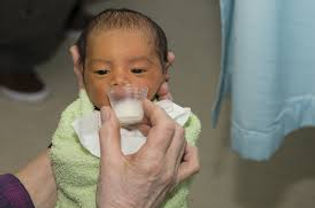
Another option to use when the baby cannot feed at the breast is to use a cup:
-
Cup Feeding
-
To cup feed, the infant must be swaddled, sitting upright and awake. Fill a small cup with breastmilk and while the infant is sitting up, feed the milk to the baby and allow it to touch their upper lip, but do not pour it into their mouth
-
This technique will allow the infant to use the same muscles they would use during a regular breastfeeding session
-
-
-
-
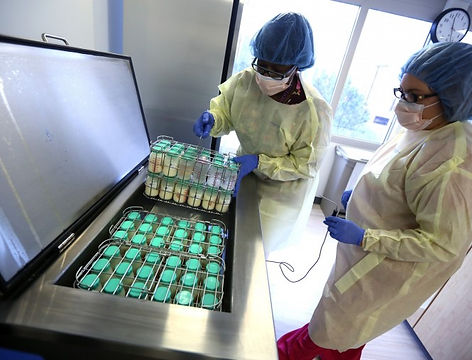
Human Milk Banking
-
Human milk can be donated from mothers who are in good health, willing to undergo a blood test, do not regularly use medications/herbal medications, and are willing to donate at least 100ml of milk
-
Non-suitable donors include those who have tested positive for HIV, Hepatitis B/C, HTLV, syphilis or if they use illegal drugs, have more than 2 alcoholic drinks a day, if they smoke, etc.
-
The donated milk will be pasteurized to eliminate bacteria while maintaining the beneficial components
-
Donor milk may be prescribed for premature infants, allergies, formula intolerance, immunological deficiencies or infectious diseases
-
-
Using Gadgets
-
Breast Pumps
-
Will mimic the infant suckling and is similar to hand expression
-
If will aid in milk removal when the baby is unable and it can help reduce engorgement
-
It is important when using a breast pump to have the correct pump, size of horns, correct vacuum pressure, timing and frequency
-
Not all women respond well to pumps so it is important to talk with your health care provider to see if it is appropriate for you to use
-
-
-

Health Nexus. (2013). Breastfeeding Matters: BestStart Guide. Retrieved from http://www.beststart.org/cgi- bin/commerce.cgi?preadd=action&key=B04-E
Ministry of Healthy Living and Sport. (2010). Baby’s Best Chance: Parents Handbook of Pregnancy and Baby Care.
Crown Publications Services: Victoria, BC.
Venter, Kathy. (2014). ‘Making a Difference: A Breastfeeding Course for Health Professionals.